Activation funnel
Painted doors test: 8 ways to ask for a bank account
- Role
- Senior Content Designer
- Partners
- Product, design, research, legal
- Surface
- Account linking activation funnel
- Constraint
- Testing features that didn't exist
- Funnel
- Bottom—activation
The problem
Credit Karma needed members to link a bank account to see their whole financial picture, and most never did. A year of copy tweaks hadn't moved it.
The solution
Offer 8 different value propositions as painted doors, and let what members responded to steer the roadmap.
The outcome
+21%
click-through on the winning proposition, and a hypothesis the team had to abandon.
What I builtThe funnel
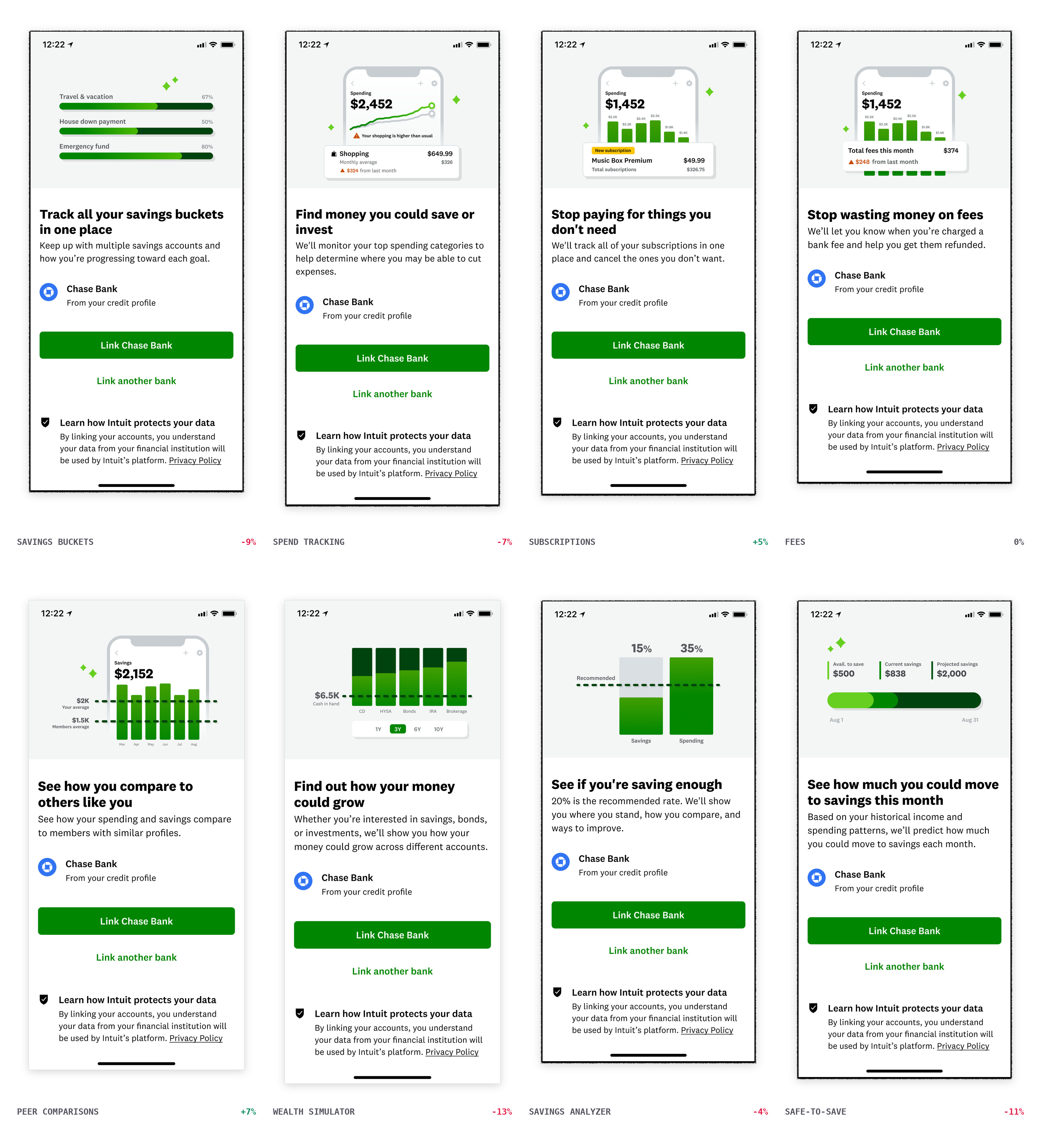
Eight promises, one real question
Linking a bank account is the highest-friction thing Credit Karma asks of a member. It's also the gate on everything the product can say about their money, so the whole experience depends on getting through it. The team had been testing button copy and headline tweaks for a year inside a single surface, and the rate wasn't moving.
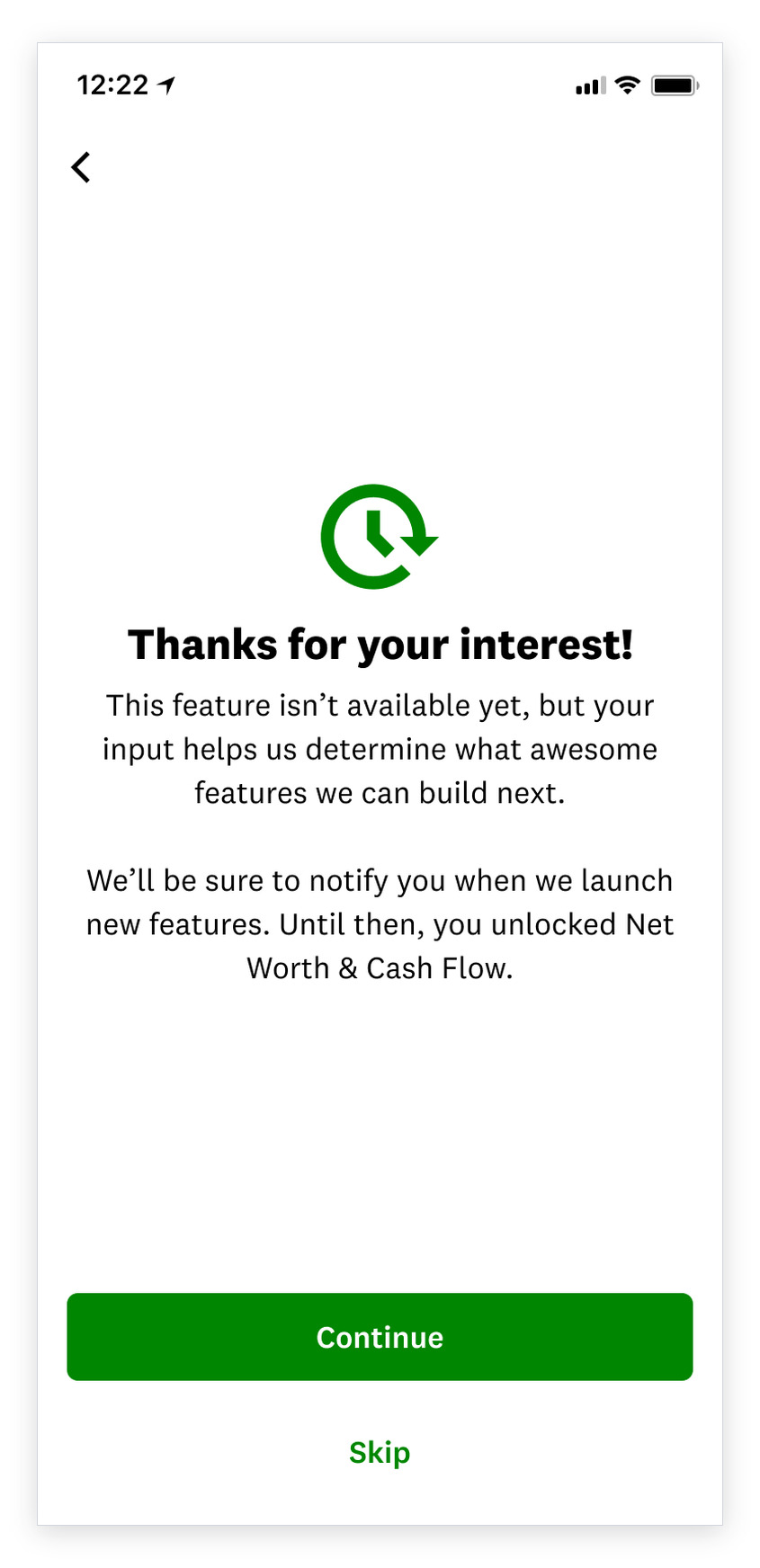
A painted door tests demand before anything is built. You offer the feature, measure who reaches for it, and tell the people who did that it isn't ready yet. I wrote all 8 propositions, the screens they lived on, and the screen that closed the loop honestly.
How I built itTwo rounds
Narrow first, then test what survives
The propositions came out of a working session with product, design, and research. We generated far more than 8, then sorted the serious contenders on impact against effort to decide which were worth a door at all.
Nobody saw a door cold
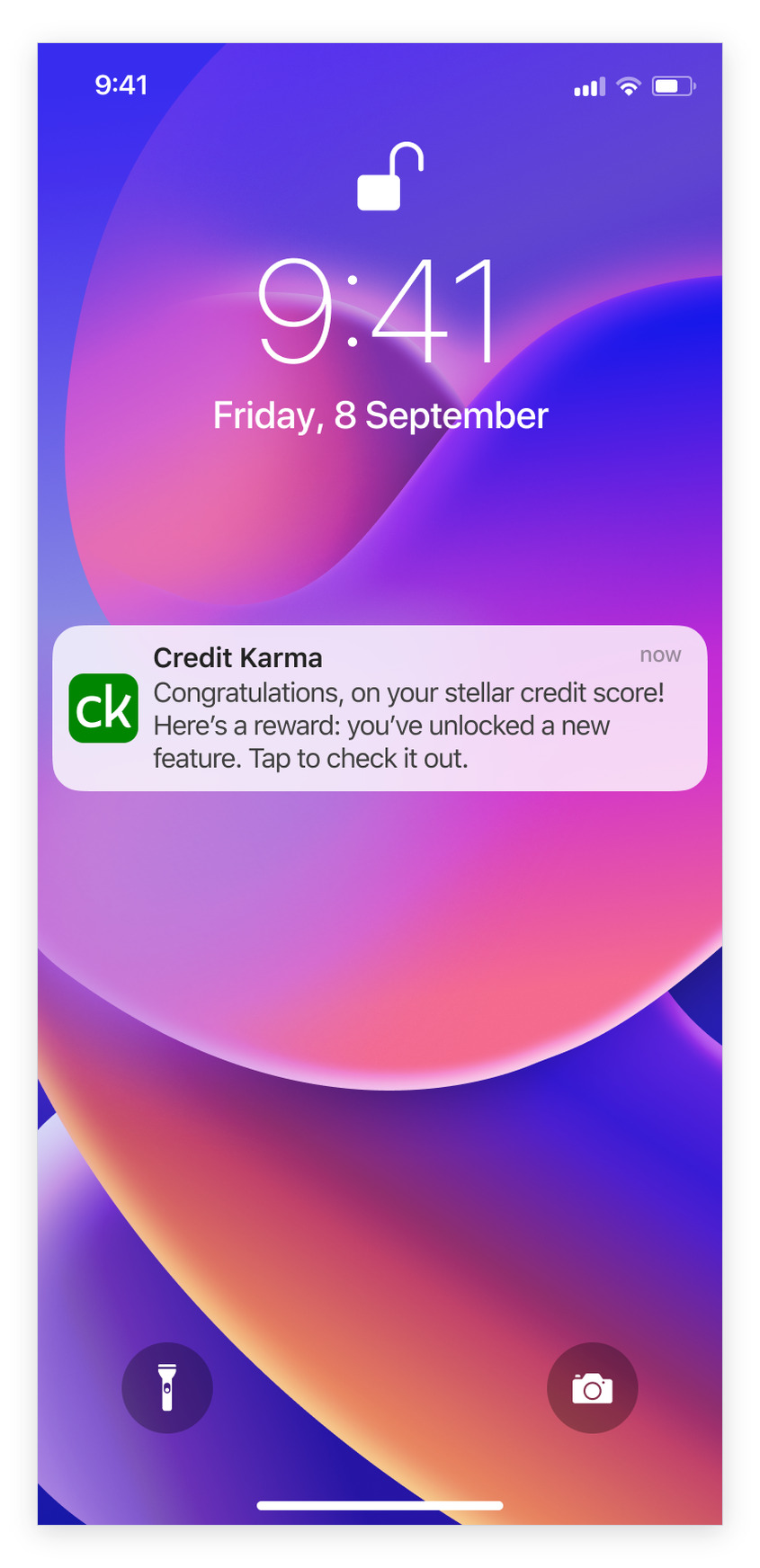
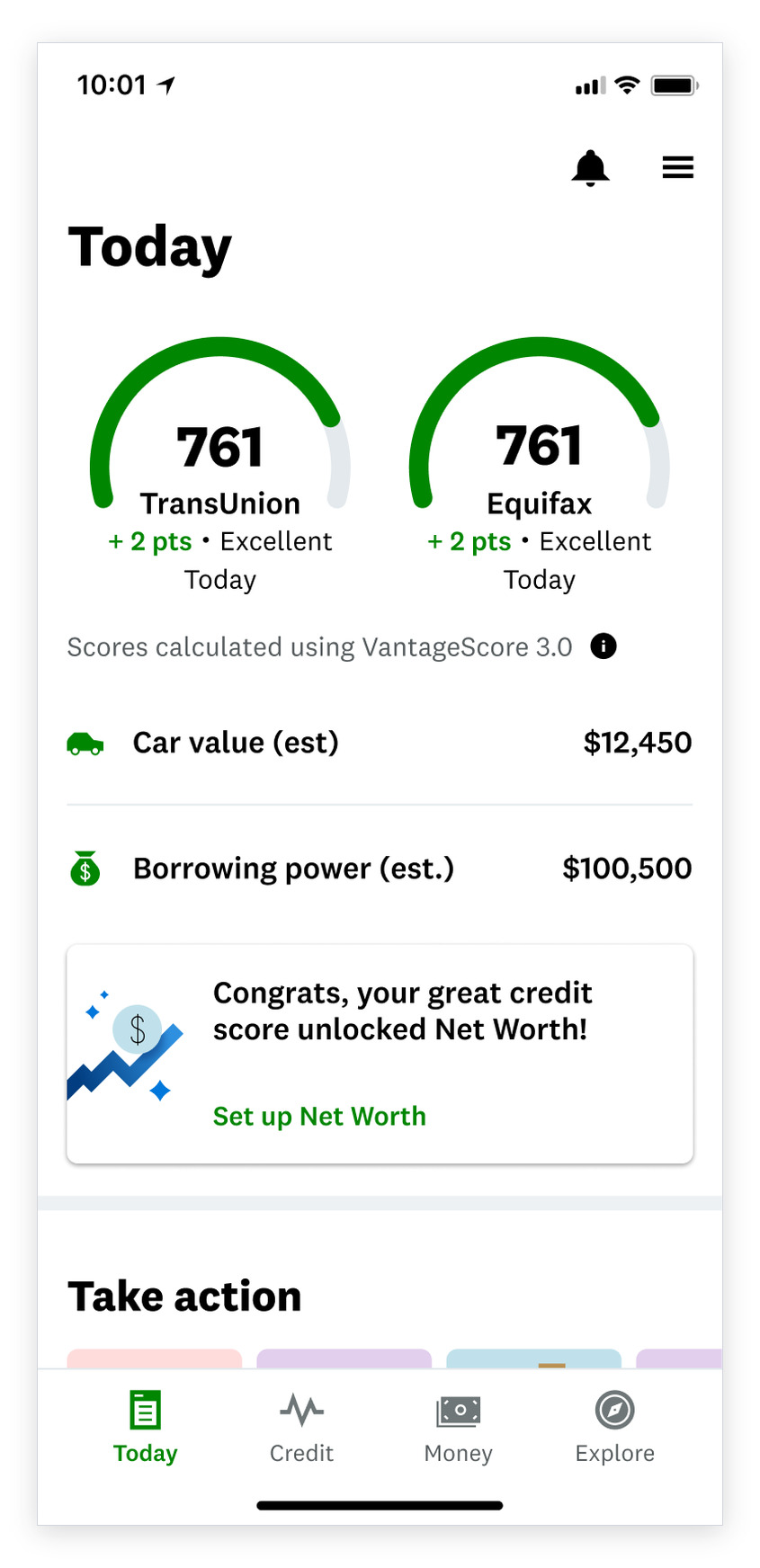
Nobody encountered a door cold. Members got here from a push notification or an in-app card, both of which framed the whole thing as a reward for a good credit score. That framing matters later.
The screen that made it honest
Every member who opened a door landed here. Legal reviewed and approved both rounds, and this screen is what made that possible.
Round 1: 8 benefit promises, and 5 lost to control
Each headline made a specific promise in the member's own terms. Roughly 4,800 members saw each one.
Most of them lost to the control. Peer comparisons was the only one that beat it by a margin the sample could stand behind, and 5 of the 8 finished below it.
Round 1.1: matching the entry framing moved 7 of 8
The control read "You've unlocked our new Cash Flow + Net Worth feature," and the push and the in-app card both used the same reward framing. Round 1's benefit headlines were the only thing in the funnel breaking that thread, which meant a difference in click-through could have been the framing rather than the proposition. So I rewrote all 8 to open the way the control opened, and ran it again.
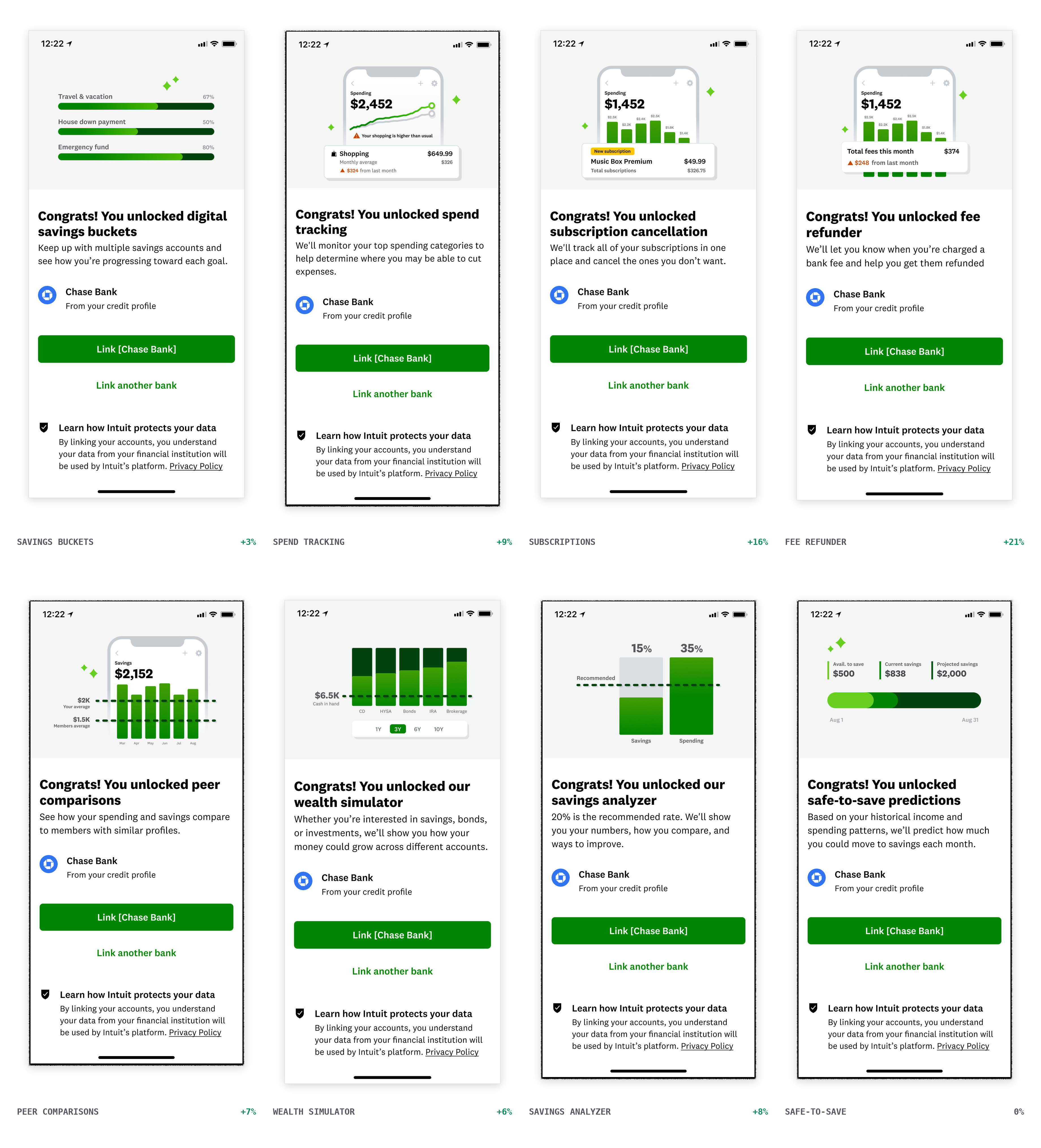
Seven of the 8 improved. Five went from negative to positive. Peer comparisons, the one Round 1 winner, held exactly where it was.
Matching the framing the member arrived with moved almost everything.
The rounds ran at different times, so this isn't a clean head-to-head. But 7 of 8 moving the same direction is hard to put down to drift, and the one that didn't move is the one that had already been winning.
Figures throughout are click-through lift against control. The underlying rates stay Intuit's.
WhyThe reasoning
We were guessing about a segment we thought we knew
The hypothesis going in was that this segment would want to grow money rather than stop losing it. They had healthy credit and positive cash flow, so cost cutting seemed like somebody else's problem. We wrote that prediction down before launch.
Once the framing was controlled, fee refunder and subscription cancellation, the two propositions about money leaving an account, took the top 2 spots by a clear margin. The simulator, the buckets, the savings predictions, everything aimed at growth, clustered at the bottom.
Writing the hypothesis down is what made that useful. A test you haven't committed to in advance just confirms whatever you already believed, because you get to decide afterward which number mattered.
What I took from itReflection
The door people open isn't the door they walk through
Round 1 measured both click-through and whether members finished linking an account. Every painted door variant finished below the control on completion, several of them significantly, even the ones that drew more clicks.
A promise raises interest and spends trust. The member who opens a door and finds an apology has learned something about the product, and it costs more than the click was worth. The propositions were still worth knowing, and the roadmap was where to use them.
That shaped how I read a funnel now. A metric near the top of one moves easily and means the least, and anything that looks like a quick win there is worth checking against the step you actually care about before anyone celebrates.
Next
The Mint Content Library →